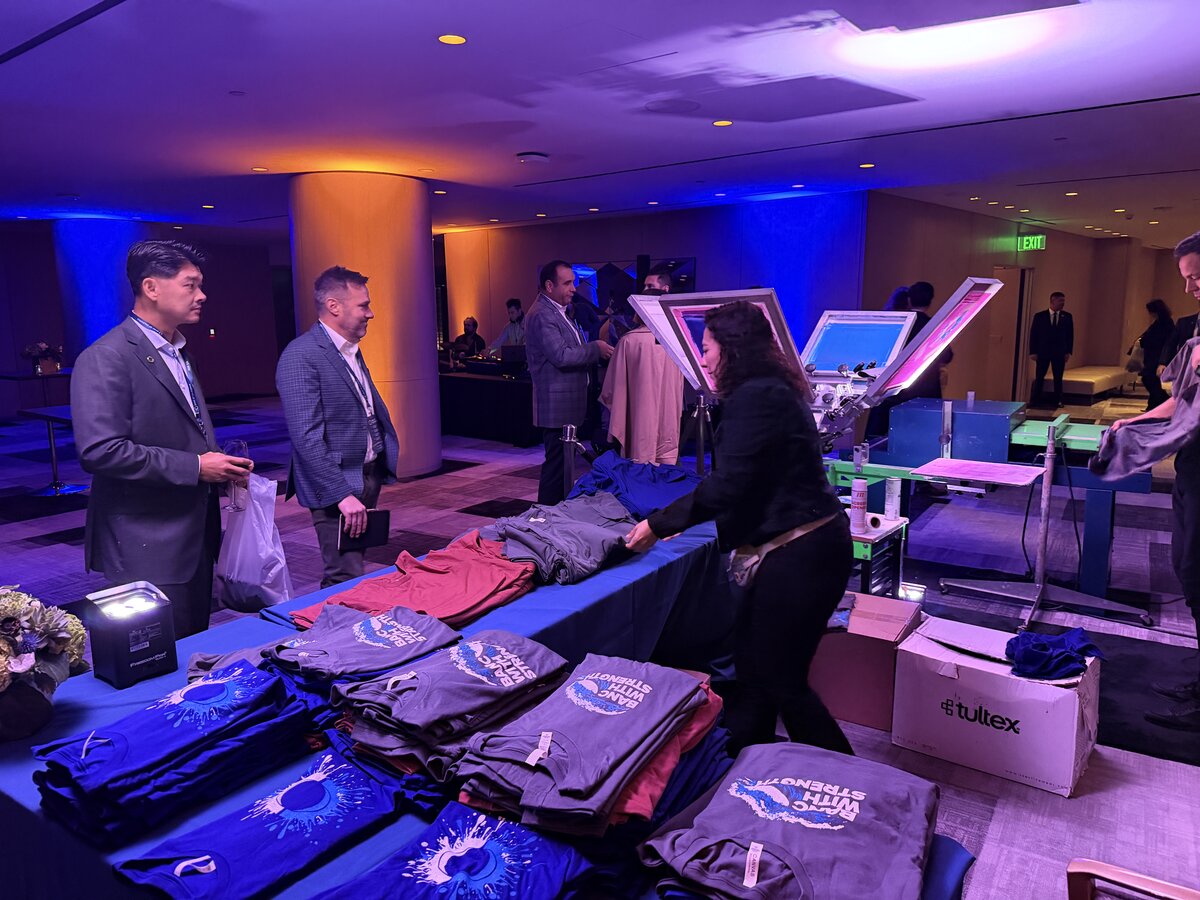
Onsite t-shirt printing turns merch from a box of giveaways into a live experience: guests pick a design, watch it get made, and walk away wearing it. The difference between a station that draws a crowd and one that bottlenecks comes down to planning. This guide walks through how the Merch Troop crew plans a live print station from the first call to the final pack-out.
Most teams approach event merch by ordering blanks, hiring a decorator, and assigning a few staffers to run a table. Onsite printing replaces that scramble with a single managed station designed around your venue, your timeline, and the guest experience you actually want. The decisions you make weeks before the event — method, product menu, booth footprint, staffing — are what determine whether the line moves smoothly on the day.
Start with the guest path, not the machine
The most common planning mistake is buying capacity before mapping flow. A press can run fast, but if guests cluster at the design table or pile up waiting for pickup, the whole station feels slow. We map four zones in every layout before anything else.
- Entry and choose: where guests arrive, see the product menu, and pick a design. A clear, limited menu keeps this fast.
- Intake: where size and design selections are captured, often with a name or claim ticket so guests can step away.
- Production: where the crew prints, presses, or stitches the item. This zone needs power, table space, and a buffer from the public.
- Pickup: a separate handoff point so finished merch leaves cleanly without colliding with the intake line.
When choosing and pickup are physically separated, throughput climbs because guests are not waiting in one static line — they browse, claim a ticket, and return when their item is ready. The goal is to keep people moving through the experience rather than parked in a queue, which also makes the activation feel more like a branded moment and less like a wait for a giveaway.
Sketch the layout against the real venue footprint, not a generic booth. Know where the entrance is, where foot traffic naturally flows, and where you want the line to form so it does not block aisles, doors, or other sponsors. A station that fits the room and respects the surrounding traffic pattern looks intentional and keeps the venue and event staff happy.
Choose a method that matches the room
Each decoration method has a different setup footprint, speed profile, and look. Matching the method to your venue and guest count is the single biggest planning lever.
Screen printing
The classic live look. A manual press and flash dryer let guests watch ink hit the shirt. Screen printing shines for a single hero design at high volume, but each color needs its own screen, so it favors simpler artwork prepared in advance.
DTF (direct-to-film) transfers
Pre-printed full-color transfers pressed onto the garment on site. DTF handles photographic, multi-color, and last-minute artwork without screens, making it the most flexible option for variable designs, names, and small runs.
Embroidery
The premium feel for hats, polos, and bags. Embroidery runs slower per piece, so it works best as an upscale add-on station rather than the primary high-volume line.
Plan throughput and the run-of-show
Capacity planning is simple arithmetic once you know the method and event window. Estimate realistic per-piece time, multiply by your operator count and active hours, and compare to expected demand. A two-press screen station can move a few hundred single-color shirts across a multi-hour event; DTF throughput scales with the number of heat presses and operators you stage.
Always plan for peaks, not averages. Guests do not arrive evenly — they surge after a keynote, at a break, or when the activation is announced. A claim-ticket system absorbs those surges by letting people leave the line and return, so your effective capacity is higher than a single static queue would allow.
Staff the booth correctly
An onsite station is a small production line, and each role keeps it moving:
- Greeter / intake: guides guests through the menu, captures size and design, hands out tickets.
- Operators: run the press or embroidery machine — the throughput bottleneck, so staff this to demand.
- Finisher / pickup: folds, bags, and hands off completed items, keeping the production zone clear.
- Lead: manages inventory, troubleshoots, and keeps the line balanced during surges.
Merch Troop staffs trained operators along with the booth, equipment, and setup so your team does not have to learn screen tension or press settings on event day. Experienced operators also recover faster when something goes sideways — a misprint, a power hiccup, an unexpected rush — which is exactly when an untrained volunteer station tends to stall. The crew is the difference between a line that keeps its pace and one that backs up the moment the room gets busy.
Build a tight product menu
Fewer choices print faster and look more intentional. A strong onsite menu pairs one or two garment styles in a curated color range with a small set of pre-approved designs. Tees in a soft retail-weight blank are the workhorse; hoodies, crewnecks, and hats make excellent premium upgrades. Stock the size curve generously — running out of mediums and larges mid-event is the fastest way to stall a line.
Lock the logistics early
The unglamorous details decide whether load-in is smooth. Confirm these with the venue well ahead of time:
- Booth footprint and table count, plus a buffer behind the production zone.
- Power: dedicated circuits and amperage for presses, dryers, and heat presses.
- Load-in access, dock or elevator times, and any union or venue labor rules.
- Artwork deadlines so screens and transfers are produced before load-in.
- A clean teardown and pack-out window at the end of the event.
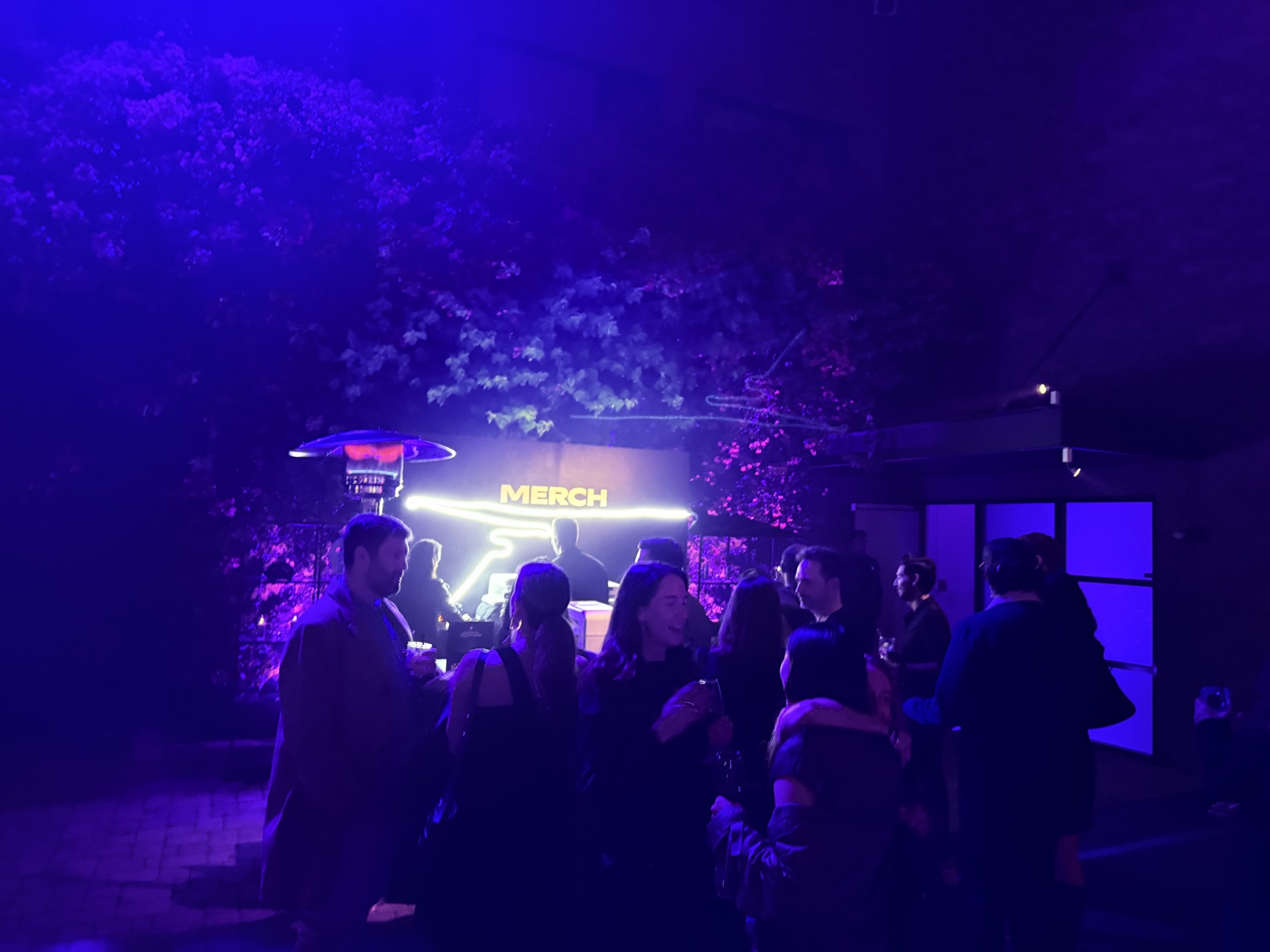
Merch Troop is based in Orange County and plans onsite t-shirt printing across Los Angeles, San Diego, Las Vegas, and nationwide for larger programs with lead time. As a single managed vendor, we handle product sourcing, artwork prep, trained operators, travel, setup, and guest handoff — so the station runs cleanly while your team focuses on the event.