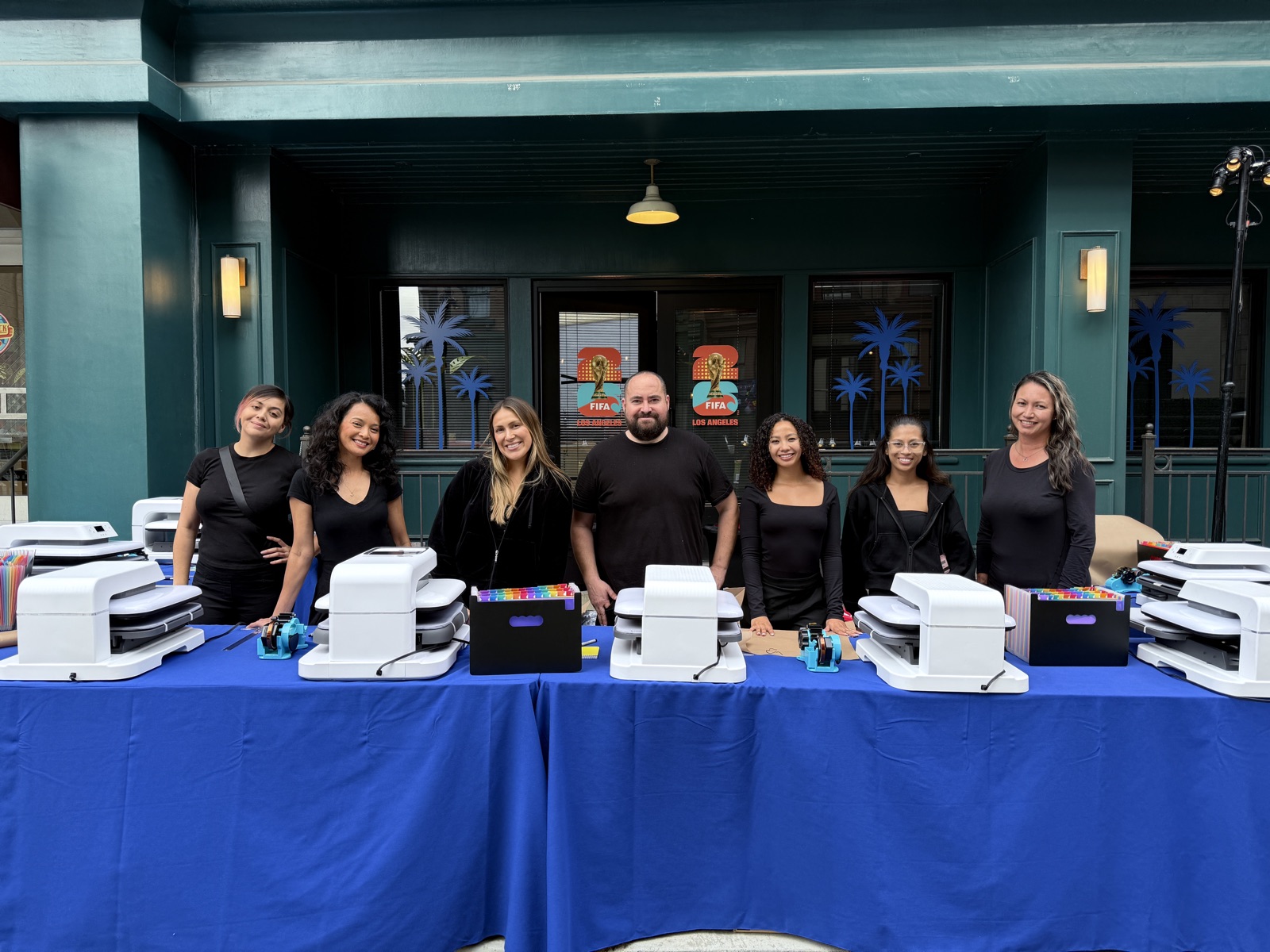
Onsite t-shirt printing is priced like a managed service, not a per-shirt order. You are paying for a trained crew, equipment, and a station that runs live in your venue for a set window. Understanding the inputs that move a quote helps you build a realistic budget and compare proposals fairly. Here are the seven factors that drive the cost.
A blank-shirt printing order has one obvious variable: quantity. A live activation has several, because the value is the experience the station delivers during your event. The good news is that these factors are predictable, so a clear brief produces a clear quote.
It helps to think in terms of value rather than unit price. The point of an onsite station is that guests choose a design, watch it get made, and walk away wearing it — a branded moment a warehouse order cannot deliver. The factors below are simply the inputs that make that moment happen reliably, and once you understand them you can shape the event to fit your budget instead of being surprised by the estimate.
1. Event hours and the run window
The length of your activation is the foundation of the quote. A crew is booked for the full window plus setup and teardown, so a longer event costs more in staffing and equipment time even at the same guest count. Most quotes are built around active production hours, with load-in and pack-out folded in. A tight, well-scheduled window is one of the easiest ways to keep cost efficient.
2. Staffing and crew size
People are the core of a live station. The number of trained operators, intake staff, and finishers needed depends on your throughput target and guest count. A larger or busier event needs more hands to keep the line moving, and skilled operators are what protect print quality under pressure. Staffing typically scales with the demand you expect at peak, not the average.
3. Guest count and production volume
How many items you expect to produce shapes both staffing and product cost. A higher volume may require additional presses, more operators, and a deeper blank inventory. Volume and event hours together set the throughput the station must hit, which in turn drives crew size and equipment.
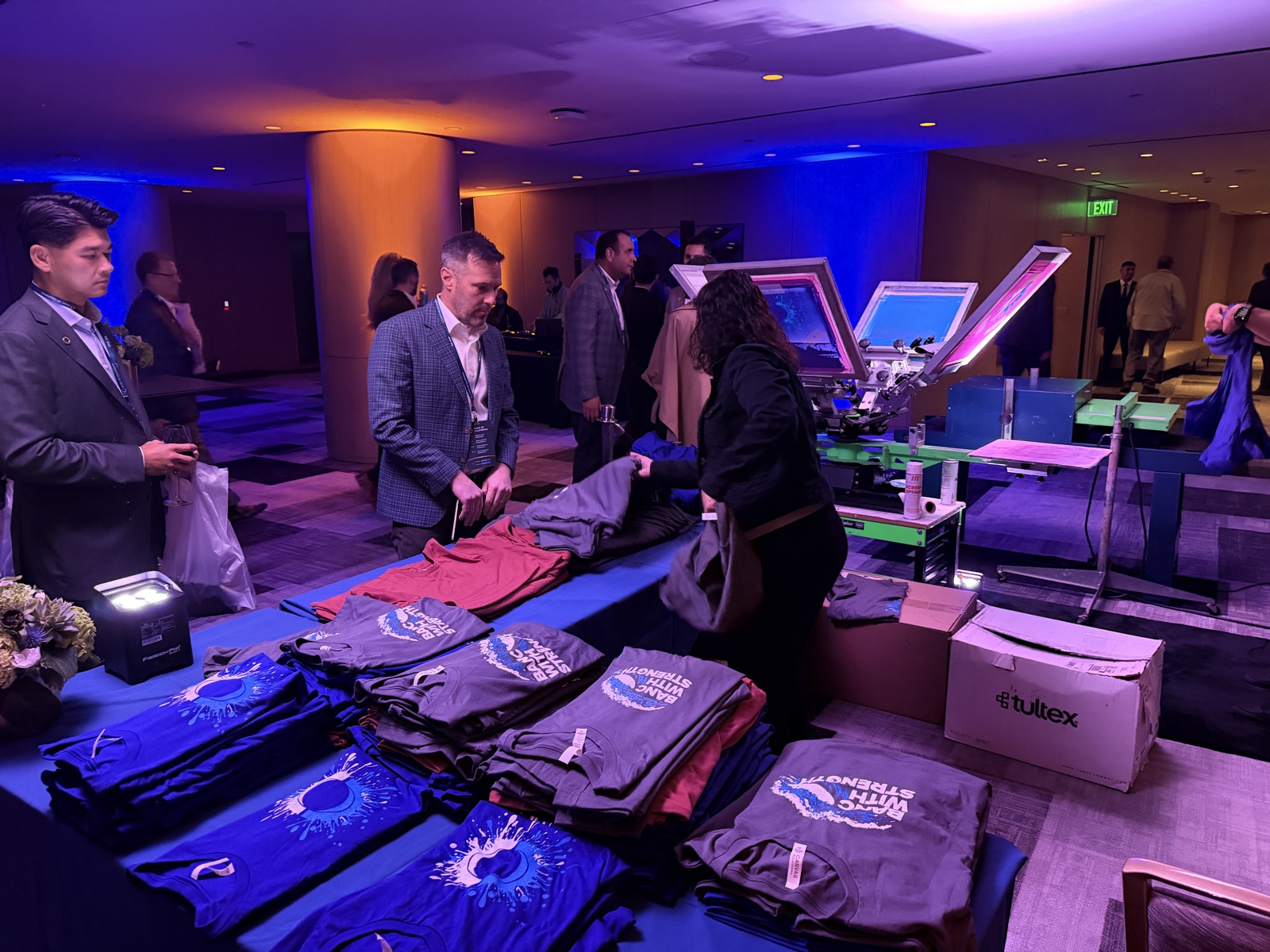
4. Products and blanks
The garments themselves are a direct cost, and they vary widely. A premium retail tee, a fleece hoodie, and an embroidered hat sit at very different price points. Whether you choose one hero blank or a layered good/better menu changes the materials line, and so does the color and size range you stock. A tighter, well-chosen menu is usually both faster to run and easier to budget.
5. Decoration method
Method affects cost through setup and consumables. Screen printing carries per-color screen setup but runs efficiently at volume on a single design. DTF transfers handle full-color and variable art without screens, with cost tied to transfer production. Embroidery is premium and slower per piece. The method that fits your artwork and volume is usually the most cost-effective one for your event.
6. Artwork and production prep
Before anyone presses a shirt, artwork has to be prepared: screens burned, transfers produced, or embroidery files digitized. Clean, print-ready art keeps this efficient; complex multi-color or last-minute designs add prep time. Building in artwork lead time before load-in keeps this factor small and predictable.
One way to keep this factor in check is to supply final, print-ready artwork early and avoid changes close to the event. Late revisions can mean re-burning screens or re-producing transfers, which adds both time and material. A locked design with clean files keeps prep efficient and predictable.
7. Travel and logistics
Where the event takes place matters. Merch Troop is based in Orange County, so events in Orange County, Los Angeles, and San Diego are local. Las Vegas and farther destinations, or nationwide programs, add travel, transport, and lodging to the quote and benefit from extra lead time. Venue specifics — load-in access, power, and labor rules — can also affect logistics cost.
What a real quote should include
A trustworthy onsite printing quote accounts for setup and teardown, trained operators, equipment, production prep, the products themselves, and any travel — not just a per-shirt number. When you send a complete brief (event date, venue, guest count, products, artwork, and deadline), Merch Troop can recommend the right station, crew, and product plan and price it accurately. As a single managed vendor, we fold product sourcing, artwork prep, staffing, travel, setup, and guest handoff into one clear proposal.
Comparing proposals on per-shirt price alone can be misleading, because a low headline number often leaves out staffing, setup, prep, or travel that you will pay for one way or another. A complete quote is easier to budget against and far less likely to produce surprises on event day. The clearer your brief, the more precise and dependable the estimate you get back.